


Introduction
Human vision is dynamic, constantly adjusting to light, motion, distance, and focus. The tools we use to study it should be just as responsive.
Research on sight, visual disorders, and perceptual effects has traditionally relied on controlled lab setups and conventional hardware rendering pipelines. These approaches have delivered valuable insights, but they can be slow to iterate, difficult to scale, and limited in how realistically they can recreate everyday visual experiences. A growing shift is underway toward real-time rendering, where researchers and educators can build interactive simulations that respond instantly to changes in scene, lighting, motion, and user behavior.
This article outlines how our post processing products and Unreal Engine can support research and education around vision. It also highlights how our products help teams develop faster, test more ideas, and communicate findings more effectively through extended reality, including VR, AR, and MR.
Why vision research benefits from more dynamic simulation
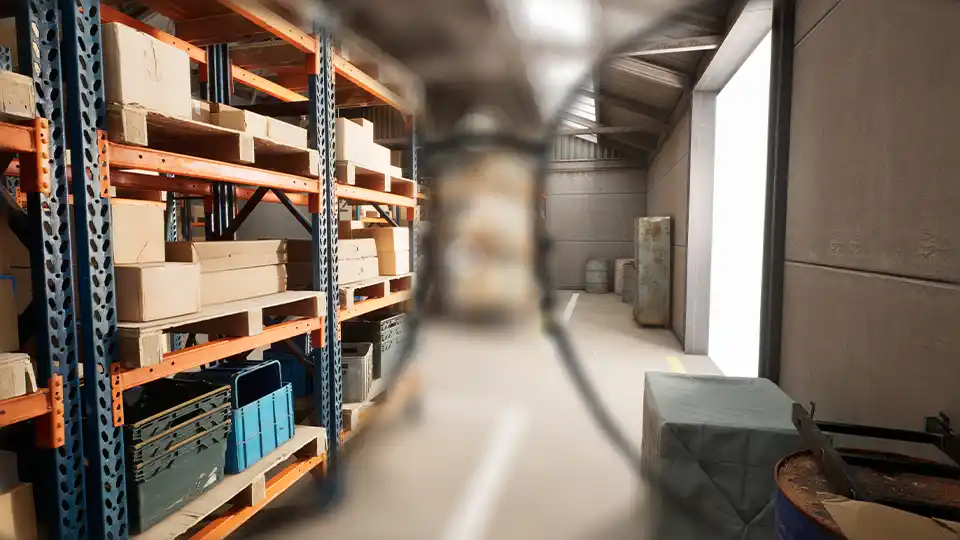
Many important visual conditions and perceptual phenomena depend on context. The same person may experience very different symptoms depending on contrast, motion, lighting, clutter, distance, or fatigue. Static images or pre rendered clips can represent a single snapshot of perception, but they often struggle to capture how perception evolves moment to moment.
Examples include
- Color vision deficiency where the impact changes with illumination and surrounding colors
- Amblyopia where reduced acuity and contrast sensitivity affect tasks differently depending on scale and motion
- Motion sensitivity and other perceptual effects where discomfort or misperception emerges specifically during movement
- Depth and stereopsis challenges which become clearer when a viewer can move and interact with a scene
Real-time simulation makes these situations easier to explore. Researchers can modify test parameters instantly, run repeated trials with consistent conditions, and build real scenarios without losing experimental control.
Moving from conventional hardware rendering to real-time rendering
A key theme in our discussion is the move away from relying exclusively on conventional hardware rendering workflows and toward real-time rendering environments. In a traditional pipeline, developing new stimuli can involve long iteration cycles, specialized production steps, and limited flexibility once assets are created. If a researcher wants to adjust the intensity of an effect, the timing of a stimulus, or the details of a scene, they may need to rebuild or re-render content.
Advantages with real-time rendering
- Fast iteration: update a parameter and see results immediately
- Interactive experiments: stimuli can respond to user input, head movement, or task performance
- Greater realism: complex lighting, materials, and motion can be represented more naturally
- Reproducibility: settings and configurations can be saved and repeated across participants and sessions
This shift matters because vision science often depends on fine control and repeatable conditions, but it also benefits from ecological validity. Real-time rendering helps bridge those needs.
Unreal Engine as a foundation
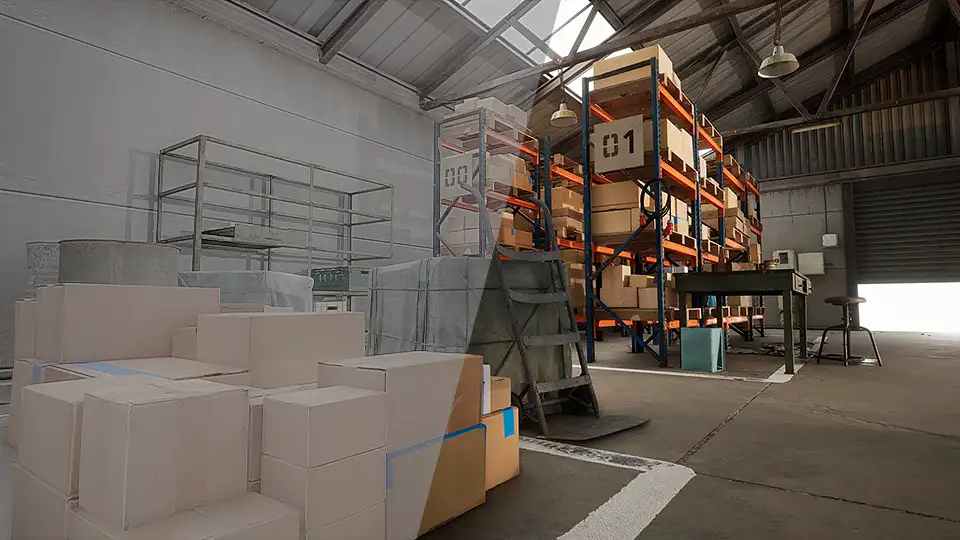
Unreal Engine has become a practical foundation for building high fidelity, real-time environments. It allows teams to construct scenes that range from simplified test setups to highly realistic spaces, such as clinics, streets, classrooms, and workplaces. For perception research, this flexibility is valuable because the same underlying platform can support both controlled stimuli and naturalistic tasks.
By using Unreal Engine, research teams can
- Prototype visual tasks quickly
- Adjust lighting, contrast, and motion on demand
- Create scenarios that simulate daily life challenges
- Standardize experiences across different labs or training sites
Importantly, Unreal Engine also supports multiple output formats, which makes it easier to transition a study or training module from a desktop display to VR, AR, or MR without rebuilding everything from scratch.
Simulating visual disorders through post processing
Post process materials / shaders are particularly effective for vision research and education because they modify the rendered image at the final stage, after the scene has been generated. This means a single environment can be used to represent many different perceptual conditions just by changing shader parameters.
Post process materials can be used to simulate or explore
- Reduced acuity or blur patterns
- Contrast loss
- Glare and light scatter effects
- Color vision differences
- Distortions that change with motion or gaze behavior
- Other perceptual effects that influence comfort and performance
For researchers, this can reduce the cost and complexity of building separate versions of every stimulus. For educators, it creates a clear and immediate way to demonstrate what a condition may feel like in real contexts.
Extended reality as a step forward in research and teaching
One of the biggest advantages of extended reality (XR), including VR, AR, and MR, is that it makes perception research and training more immersive and realistic. Rather than asking participants to imagine how a visual disorder might affect navigation, hand-eye coordination, or attention, XR can place them in a scenario where they experience those challenges firsthand.
This has several benefits
- Training and education: students, clinicians, and caregivers can better understand symptoms and patient experiences
- Demonstration and awareness: realistic simulations can support communication with non specialists and stakeholders
- Task realism: navigation, reaching, reading, and hazard detection can be studied in environments that feel natural
- Safer experimentation: challenging scenarios can be tested without real world risk
XR can also support consistent experiences across users, which is important when training needs to be standardized.
How our products support this shift
We have over two decades of experience building innovative solutions for real-time rendering and interactive graphics. That experience is reflected in our large library of high-quality post process materials and shaders, with more than 125 available today and additional releases planned this year.
This gives researchers and educators a strong starting point for building everything from targeted simulations to fully interactive learning experiences in Unreal Engine.
Key benefits
- Real-time workflow: Iterate quickly and run experiments without lengthy rebuild cycles
- Flexible simulation: Represent a wide range of visual disorders and perceptual effects through shader-based control
- XR readiness: Deploy experiences to VR, AR, and MR for immersive training, teaching, or research studies
- Clear communication: Demonstrate complex visual changes in a way most audiences can understand
- Consistent trials: Keep parameters consistent while exploring realistic, interactive scenarios
Tailored solutions for your team
In addition to our core products, we provide tailored solutions designed to meet your specific requirements. We have worked with some of the most respected studios in the industry, helping teams solve complex real-time rendering and interactive graphics challenges.
Let us help you design and build the right solution for your next research project, training program, or XR experience, including custom shaders, tailored simulation workflows, and complete interactive prototypes.
For more information about our studios & enterprise work, visit the for-studios page, or contact us on our contact page.
Research collaboration and adoption
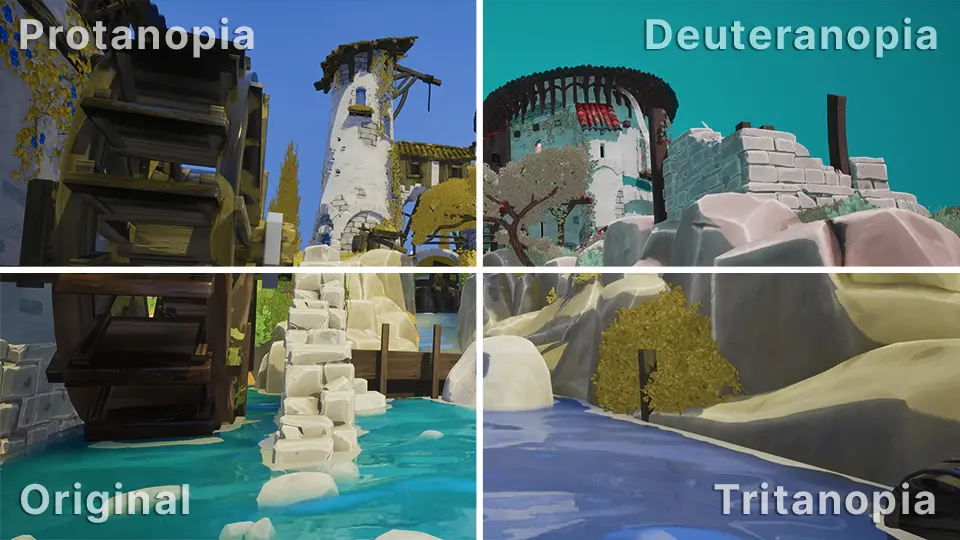
We are currently in discussions with VARID about a potential collaboration focused on open source, data-driven simulations of visual impairments. This aligns closely with what our library already supports, including myopia, glare and bloom effects, chromatic aberration, cataract related phenomena such as yellowing and contrast changes, and color vision deficiency models.
Our products have also been adopted by teams who develop physical optical solutions, like medical eyewear. For example, Neurolens, the maker of the world's first and only therapeutic lenses intended to help relieve symptoms such as headaches, motion sickness, and neck pain, has acquired some of our products. We are proud to see our technology contribute to a future where optical innovation directly improves human health and accessibility.
Finally, thousands of developers, educators, and researchers have benefited from our Color Blindness products, which are available free of charge. Read more about our Color Blindness product.
Conclusion
Research supported by our post process materials and real-time simulation has practical outcomes. It can improve how clinicians understand and communicate visual conditions, help designers create more accessible products and environments, and accelerate the evaluation of interventions or assistive technologies. Just as importantly, it can make complex perceptual phenomena easier to teach and easier to demonstrate.